One boundary between intent and action
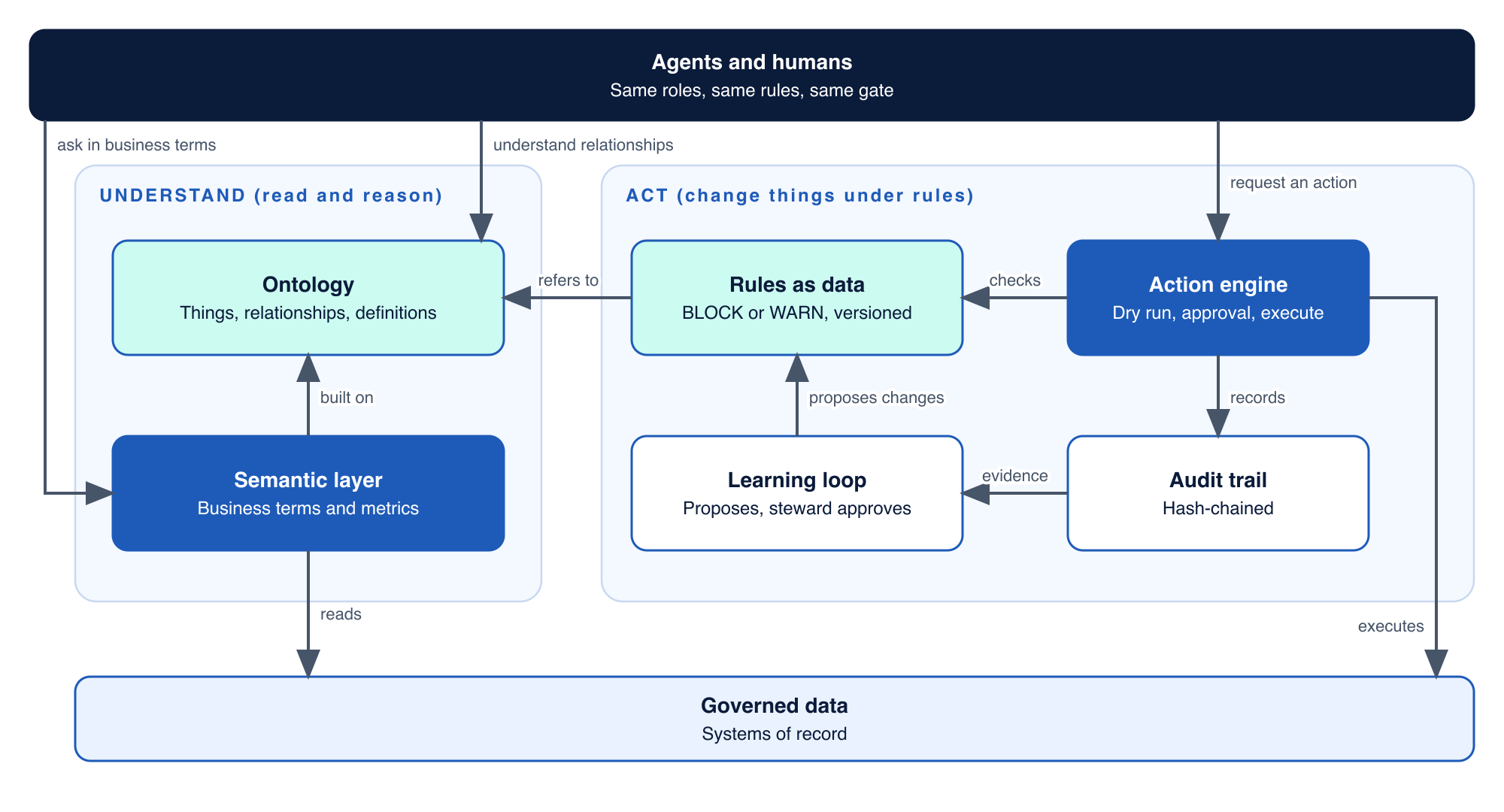
The harness sits between whoever is acting and the systems of record. Nothing changes without passing through it.
The layers
Each layer does one job and hands off to the next.
Governed data
The data the business already trusts, with access tied to roles. Masking and row-level policies apply from the first row.
Ontology
Entities, relationships and definitions. An expense report has line items, belongs to an employee and is charged to a cost centre.
Rules as data
Thresholds and conditions are rows, not code. Each rule has a severity, an owner, an effective date and a reason.
Action engine
The only route to change anything. Requests are checked and approved, then executed and logged.
Semantic layer
Questions are answered in business terms from the same definitions the rules use.
Agents and humans
Both act as roles under the same gate. An agent is not a special case.
The governed action path
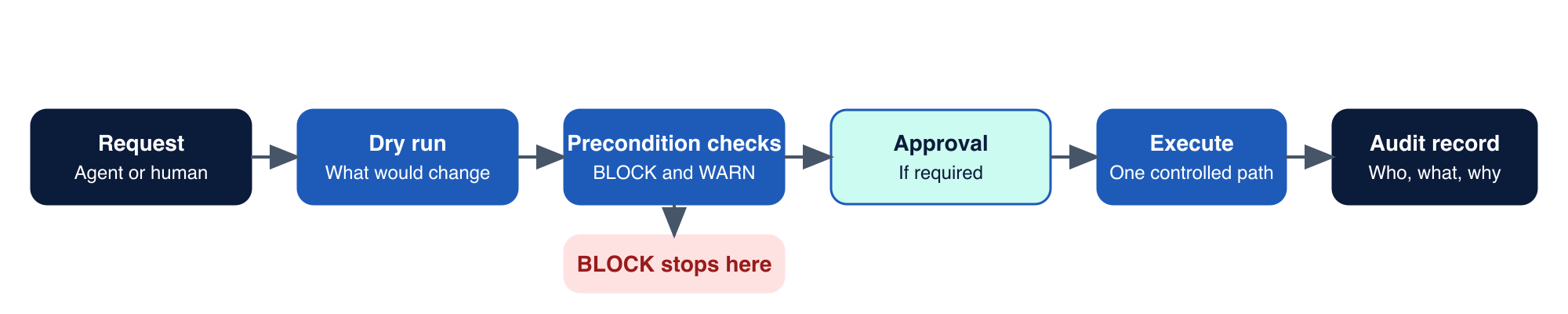
Every change follows the same steps. A BLOCK result ends the request before anything is written, and checks run again at execution so a limit that changes between preview and commit is not missed.
Hard stop
The action cannot proceed. Example: submitting an expense over the receipt threshold with no receipt.
Flag and continue
The action proceeds with a visible flag and a reason on record. Example: a meal over the daily cap.
Separation of duty
Routing rules prevent someone approving their own request or their own rule change.
Rules as data
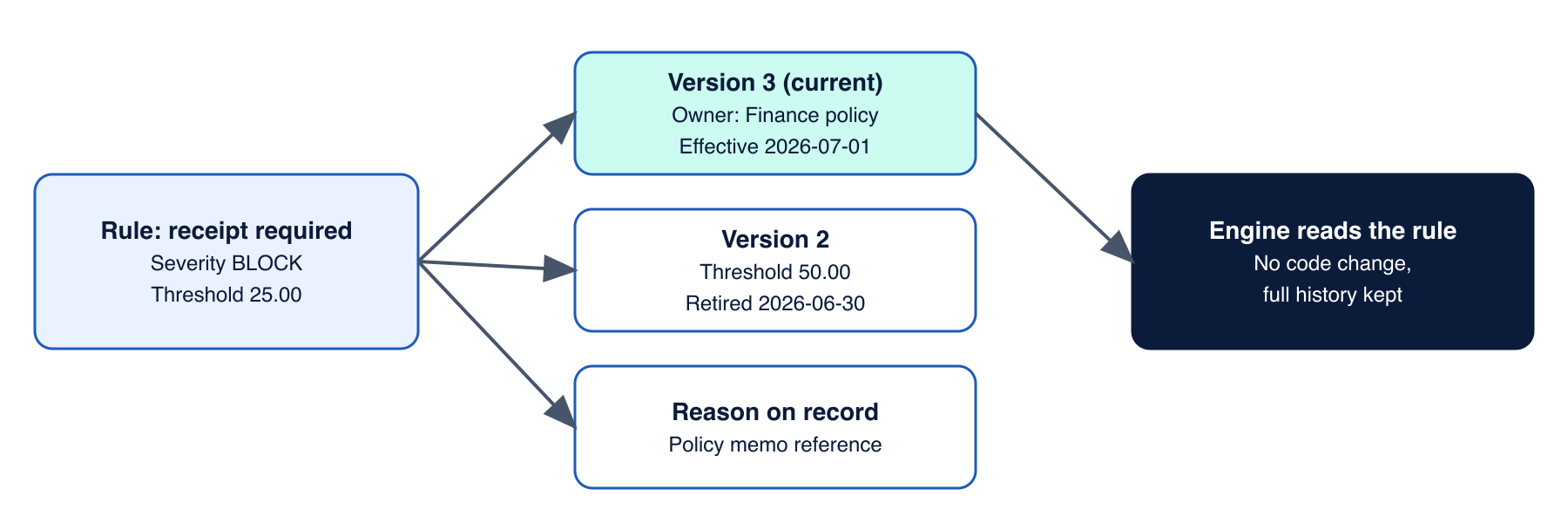
Because rules are data, changing a limit is an edit with an owner and a date, not a deployment. The old version stays, so you can say what was true on any day.
Where maturity comes from
Most teams start with policy in documents. The harness moves you up the ladder one step at a time.
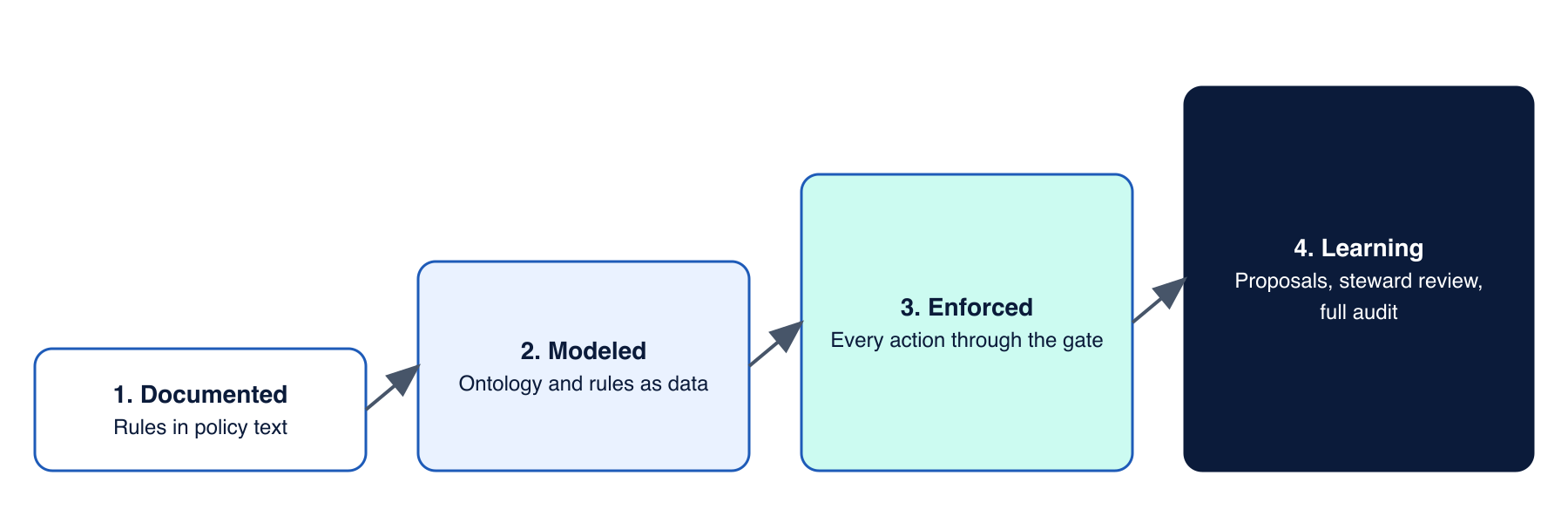
Learning that cannot rewrite its own rules
The harness watches overrides, repeated warnings and near misses. It proposes a change and cites the evidence. A named steward reviews it. Only then does a new rule version take effect. The agent that benefits from a loosened rule is never the one who approves it.
A kill switch that already exists
Because agents hold roles, revoking the role stops the agent. No special shutdown path is needed, and it does not depend on the agent's cooperation.
Audit you can verify
Each action record links to the one before it with a hash. If someone edits history, the chain breaks and the break is detectable.
Put a boundary around what your agents can do
We are onboarding a small group of early access teams. Tell us what you want to ground, automate or audit.
Request early access